
Introduction
Japandi is not only an minimalist interior trend but also psychologically one of the best choices to calm your nervous system.
As European homeowners increasingly seek sustainable living, natural materials and mindful design, Japandi has become one of the most searched interior styles across countries like Germany, Denmark, the Netherlands, France and the UK.
Read here how you can create the perfect space using only a few simple steps.
By blending Japanese minimalism with Scandinavian functionality and warmth, Japandi interior design creates calm, timeless spaces that feel both elegant and deeply livable.
What Is Japandi?
Japandi is a hybrid interior design style that combines:

- Japanese minimalism
- Scandinavian cosy, functional comfort
Core Principles of Japandi Design
- Every item has a function
- A lot of natural elements, as well as neutral and earthy colour palettes
- Low furniture and clean silhouettes
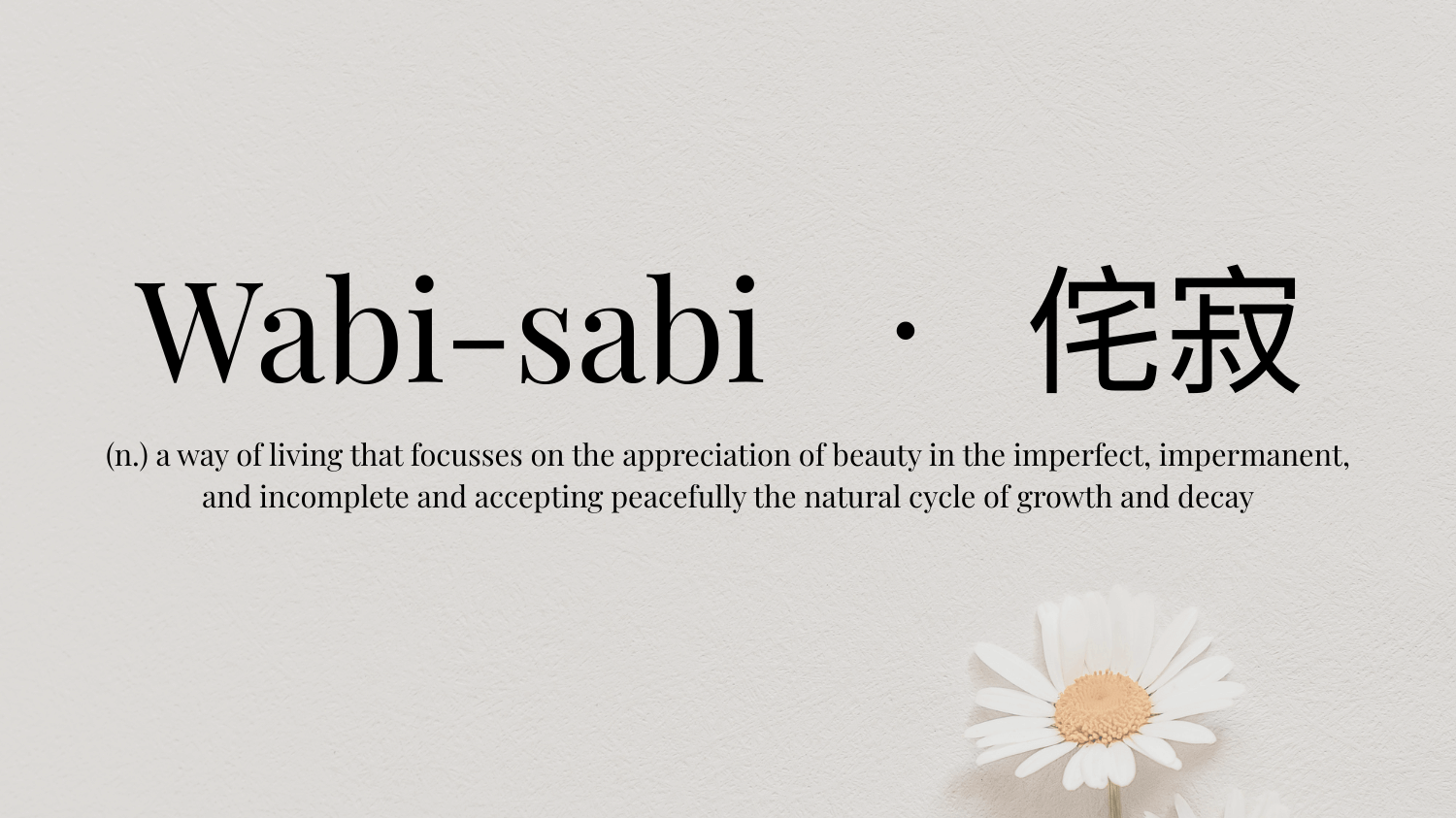
- Wabi-Sabi philosophy
6 reasons why Japandi is the best choice for your anxiety
These Japandi features are helping you to relieve stress:
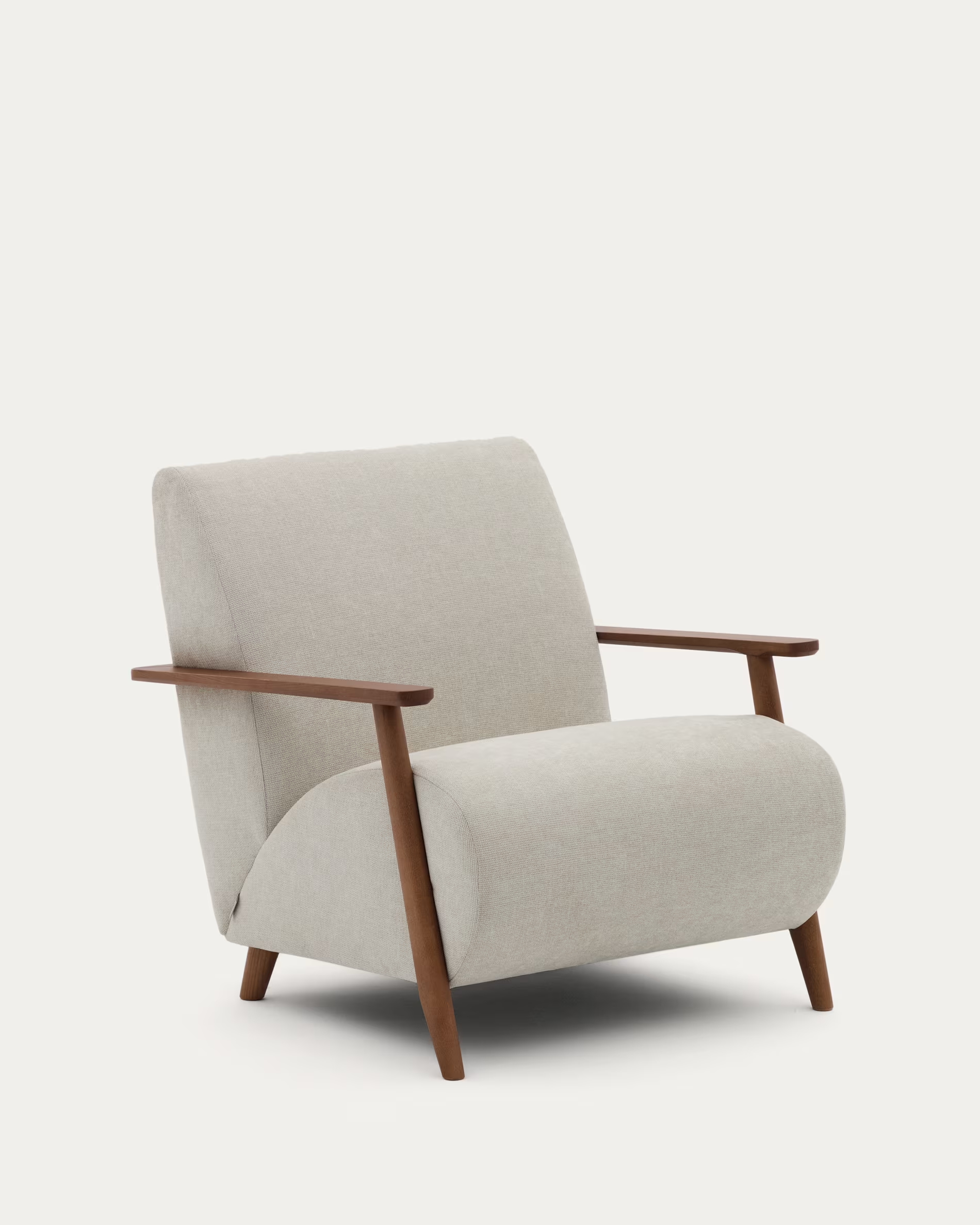
- Shape of the furniture: Our brains feel safe with rounded shaped objects over sharp angles or points
- Color: Monochromatic color schemes make our eyes feel calm because they give it a moment to rest.
- Minimalistic approach: The less you have to do to maintain your space, the less anxiety you have. Additionally, visual clutter is reduced, which makes out body relax.
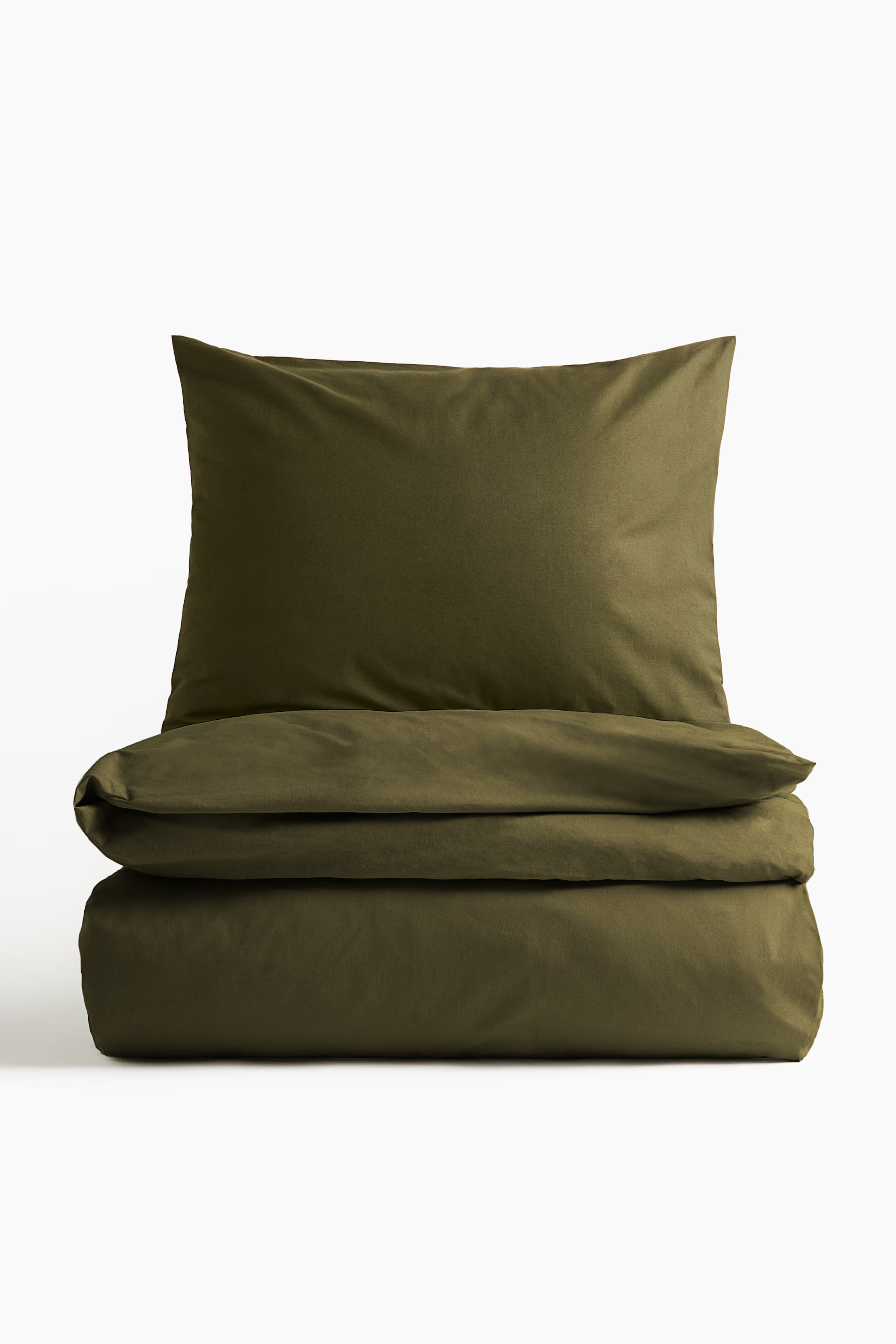
- Natural Furniture: Wood and any shade of green reflects nature and feels grounding and safe
- Natural Artwork: Pictures of landscapes, fields, oceans, mountains and rivers brings a sense of calm
- Lighting: By using indirect warm light your nervous system automatically goes from rush to rest
In countries known for design excellence, such as Scandinavia, Germany and Italy, Japandi fits naturally into the European appreciation for quality and longevity.
Key Japandi Interior Features
1. Japandi Colour Palette
Japandi colours are soft, muted and inspired by nature:
- Warm whites and creams
- Light oak and walnut wood tones
- Stone grey, clay, taupe
- Subtle black accents for contrast
These palettes create an airy, balanced atmosphere.
2. Japandi Furniture Design
Japandi furniture is characterised by:
- Clean, simple forms
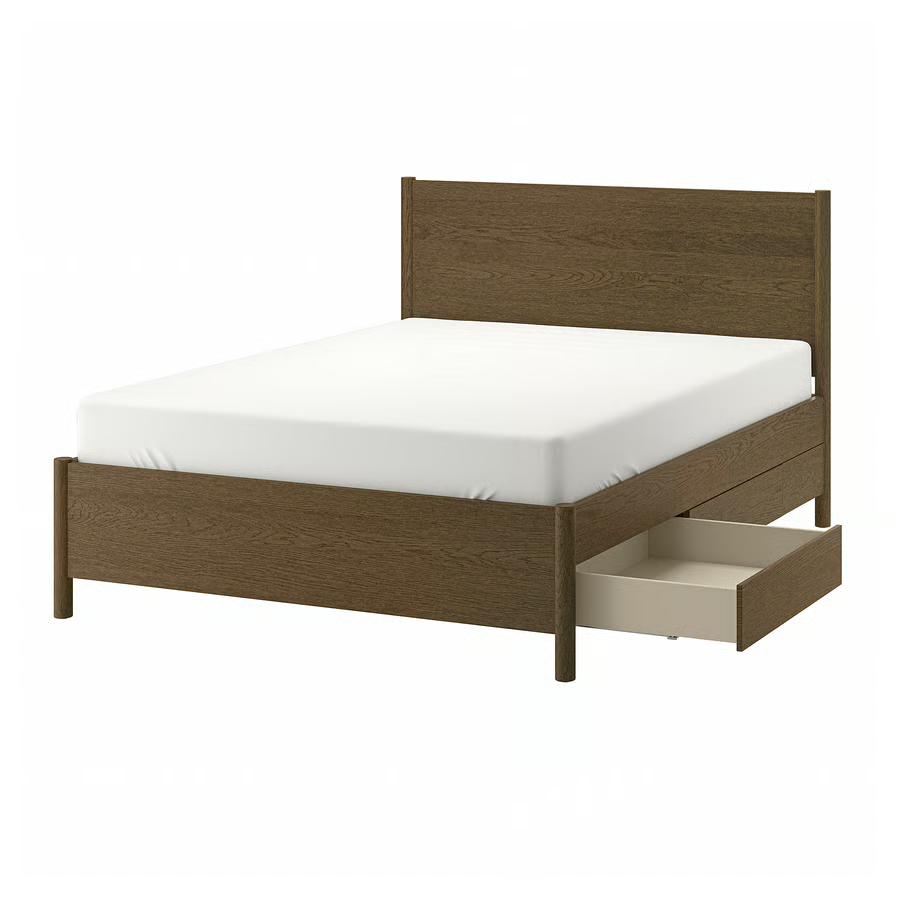
- Low seating and beds
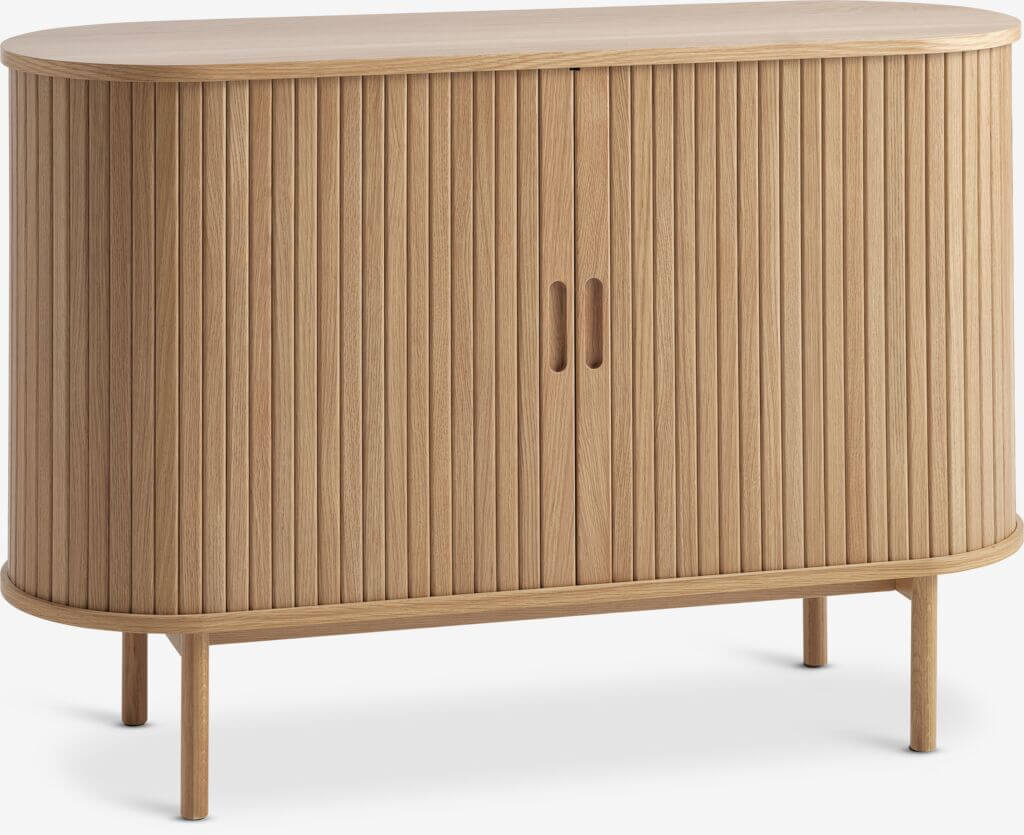
- Solid wood craftsmanship
- Matte finishes instead of gloss
They are functional, elegant and timeless.
3. Materials & Textures
Natural textures are essential:
- Solid wood (oak, ash, beech)
- Linen, wool and cotton textiles
- Handmade ceramics
- Stone, concrete or limewashed walls
It aligns perfectly with European sustainability standards and eco-conscious living.
How to Create a Japandi Interior at Home
Step-by-Step Guide
- Declutter first – Japandi begins with space and simplicity
- Choose a neutral base – walls, floors and large furniture
- Invest in fewer, better pieces
- Layer natural textures for warmth
- Add subtle contrast using dark wood or black accents and plants
- Keep decoration intentional and minimal and play with lighting
Japandi Style Inspo by Room
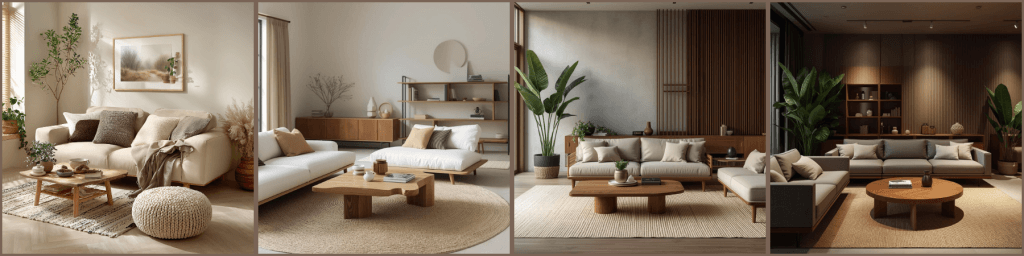
Japandi Living Room Ideas
- Low-profile sofas
- Wooden coffee tables with soft edges
- Minimal shelving
- Natural rugs and linen cushions
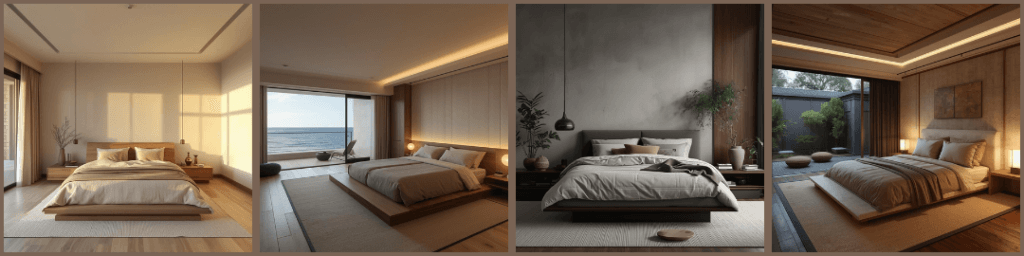
Japandi Bedroom Inspiration
- Platform beds
- Neutral bedding
- Soft lighting
- Calm, clutter-free surfaces
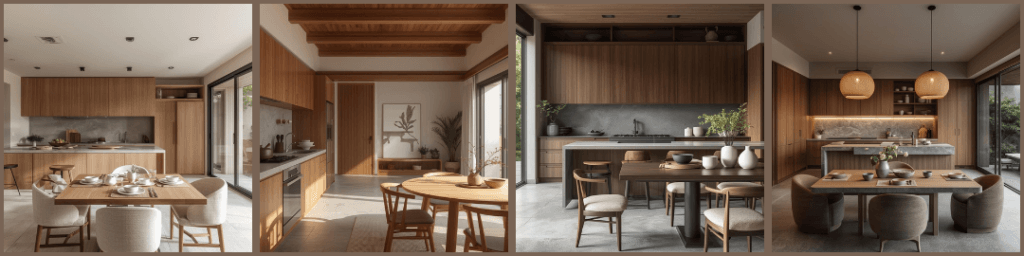
Japandi Kitchen & Dining
- Wood-front cabinetry
- Stone or concrete countertops
- Simple ceramic tableware
- Open, breathable layouts
5 mistakes that make Japandi look sterile and how to fix them
| Problem | Solution |
| Too much white/grey | Use warm whites, beige, clay and soft earth tones |
| Not enough texture | Layer wood, linen, wool, ceramics and stone. |
| Mixing too many wood tones | Stick to one main wood tone and one subtle accent at most. |
| No contrast at all | Add contrast with dark wood or plants. |
| Ignoring lighting | Use warm indirect light sources like paper lamps for layered lighting. |
Where to find Japandi Style Furniture
Conclusion
Japandi interior design perfectly reflects the desire for simplicity, sustainability and calmness to counter the stressful day-to-day life.
Whether you live in a modern city apartment or a countryside home, Japandi makes your home feel balanced and deeply comfortable.